MALES
One copy, all orange
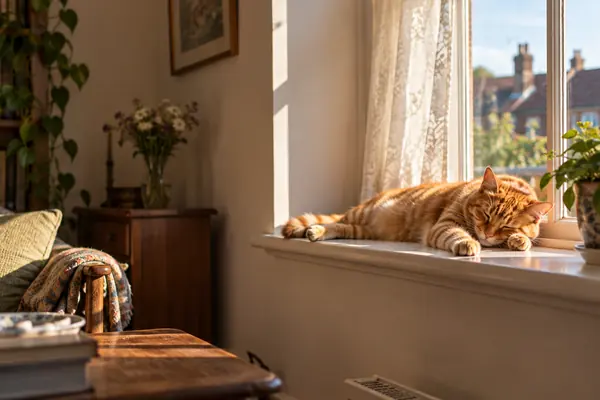
A male cat with the sex-linked orange variant will be entirely orange, because his single X carries it.
Check a coat gingerdoodle
WHAT THE GENETICS SAYS
Most ginger cats are boys. There is a reason.
Check a coat
ONE Xone ginger tom
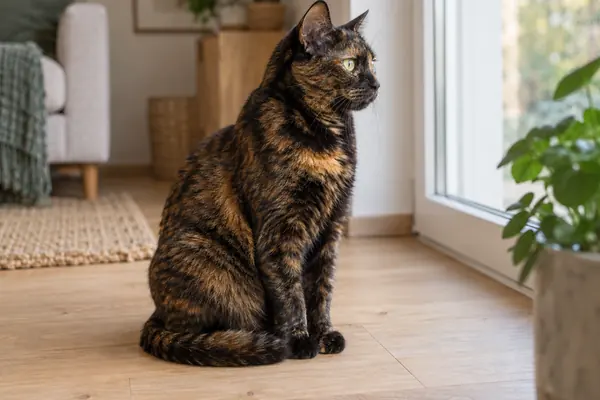
The change that turns a cat's fur orange sits on the X chromosome. A male has one X, so one copy is enough. A female has two, which is why she is more often patched than fully ginger.
At a glance
1 in 3,000
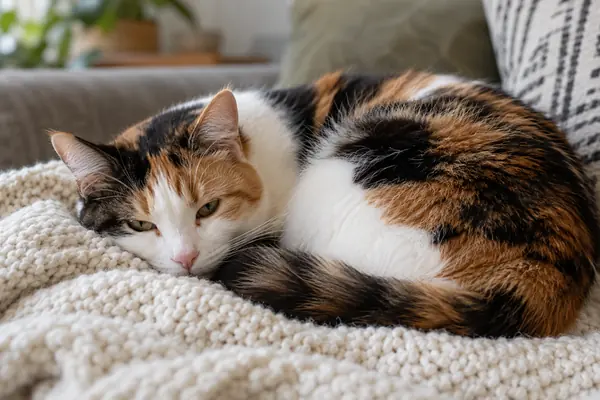
Calico cats that are male
Male calicos usually carry an extra X chromosome (XXY). Such cats are called Klinefelter males and are usually sterile.
MALE CALICOS · UNIVERSITY OF MISSOURI
12th century
Paintings showing clear calico cats
Researchers think the orange mutation arose early in cat domestication, because calico cats appear clearly in paintings from the 12th century.
HISTORY · STANFORD MEDICINE
TWO NUMBERS WORTH KNOWING
One figure on male calicos,
one on how old orange fur is.
The Kyushu team found the same deletion in all 10 orange cats they first tested and in none of 8 non-orange cats, and the pattern held in 49 more. Both studies were published in Current Biology in May 2025.
A QUICK COAT CHECK
Pick a coat to see the genetics behind it. The bar shows how unusual that combination is.
Based on 2025 research summaries from Kyushu University and Stanford Medicine, and a University of Missouri study quoted by a vet on Vetstreet.
THE SHORT ANSWER
Males are XY, females are XX.
The orange variant rides on the X.
MALES
A male cat with the sex-linked orange variant will be entirely orange, because his single X carries it.
Check a coatTORTOISESHELL
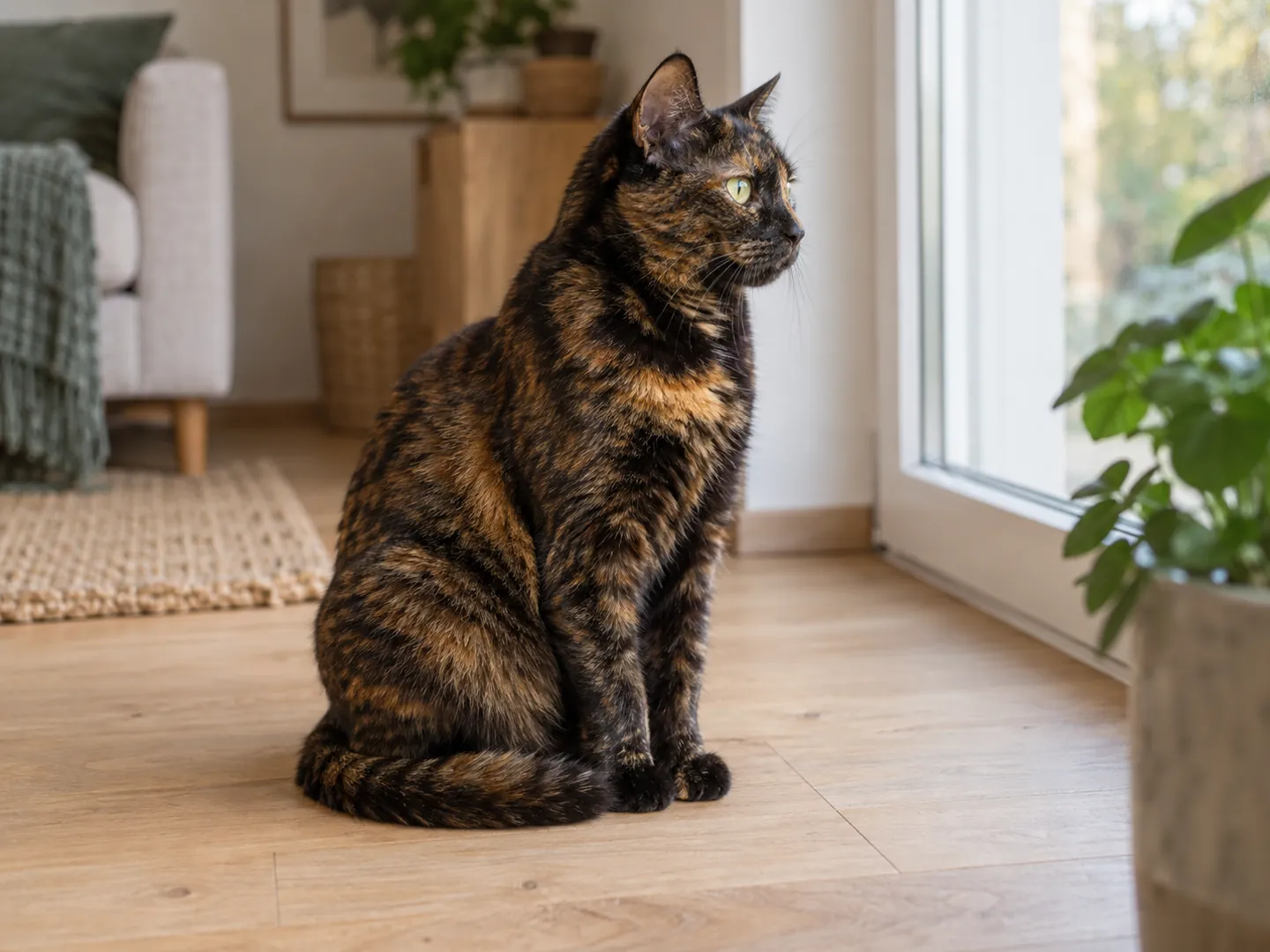
A female with one orange and one non-orange X shows a mottled tortoiseshell coat, or calico patches when there is white too.
What it tells youCALICO
Early in development one X in each cell is switched off at random. Each patch of fur shows which X won in that area.
See the numbers
FOUR THINGS TO KNOW
Coat colour is a neat window into genetics. Here is what the research supports, and where it stops.
Probably, not certainly. Females can be fully ginger when both X chromosomes carry the orange variant.
The mottled coat needs two X chromosomes with different colour variants, which normally means a female.
Stanford found no difference in the gene's activity in kidney, heart, brain or adrenal gland between orange and non-orange cats.
Researchers say there are not many scientific studies of orange cat personality, and reputations may reflect most being male.
WHY THE PATCHES
Early in a female kitten's development, one X chromosome in every cell is switched off at random. As cells divide, areas form where either the orange or the black version is active, and the fur records them as patches.
The 2025 studies found the cause: a small deletion near a gene called ARHGAP36. It leaves the protein unchanged but switches the gene on in pigment cells, steering them from dark pigment towards lighter, orange pheomelanin.
Questions
No, but most are. A male needs only one copy of the orange variant on his single X chromosome; a female needs it on both X chromosomes to be fully orange, which is less likely.
Rarely. A male calico usually has two X chromosomes and a Y. A University of Missouri study found about one in every 3,000 calico cats is male, and these cats are usually sterile.
In 2025 teams at Kyushu University and Stanford Medicine found a small deletion on the X chromosome that turns on a gene called ARHGAP36 in pigment cells, producing orange fur.
Stanford researchers think the mutation arose early in domestication, pointing to 12th-century paintings that clearly show calico cats.
There is little evidence. A Stanford researcher noted there are not many scientific studies of orange cat personality, and any reputation may reflect most orange cats being male.
Sources
ABOUT THIS NAME
gingerdoodle.com is part of the DoodleSale portfolio. It isn't in an auction right now, but you can ask about leasing it.